Many companies clearly see innovation as essential for survival. At the same time, it often remains unclear to what extent innovation is actually implemented in everyday working life: Are new ideas actively introduced? Do they find their way into projects? And how do employees perceive innovation efforts?
This is based on the scientific approach of the innovation balance sheet for the systematic recording and evaluation of an organization's innovation capability. It is based on the consideration of input, throughput and output of innovation processes. Resources, processes, structures and results of innovation work are brought together in an integrated model. The aim is to create transparency about strengths and weaknesses in the innovation system.
In the workshop format we have developed, the innovation rally, such an innovation balance sheet results from a combination of qualitative discussions and quantitative surveys. In this way, we draw a differentiated overall picture of a company's innovation capability and thus form the basis for targeted and efficient planning of the subsequent innovation work.
We have been running the innovation rally regularly for four years now, and remotely for the past six months. We are deliberately passing on the results obtained in a transparent manner below. We were able to make visible how innovation is already practiced in companies and where there is still potential for development.
The participants go through four stations, each of which highlights a central dimension of innovation. Each station first creates a common understanding of the respective topic area, after which the participants discuss their experiences based on selected key questions.
This is supplemented by a quantitative assessment using standardized questionnaires. This combination of qualitative discussion and structured data collection creates a differentiated picture of innovation capability.
The first part of the innovation rally focuses on innovation culture and the question of how open the organization really is to new ideas.
In the case of banks, it was often shown that an innovation-friendly attitude already exists at a normative level. Innovation is generally perceived as legitimate. At the same time, it is clear to some that the systematic development of skills in the context of innovation is not yet firmly established across the board, which means that the ability to innovate remains highly dependent on the individual. Existing communication and exchange formats at some banks are also only partially geared towards the targeted development of the innovation culture, which means that the potential for visibility and joint learning has not yet been fully exploited.
Innovation is particularly effective when a clear strategic direction is recognizable. The second part of the innovation rally therefore focuses on how innovation goals are actually anchored in the company.
In many companies, innovation is fundamentally strategically anchored and actively supported, but the strategic orientation remains primarily exploit-oriented: The focus is on improvements and efficiency, while explorative approaches are present but less pronounced in the overall picture. The existing innovation instruments are mostly used selectively, but are not yet consistently embedded in an overarching strategic logic.
There is also a gap between the strategic level and operational penetration: The innovation strategy is not consistently present in everyday working life and is perceived by parts of the organizations as regulatory legitimized rather than intrinsically formative.
In order for ideas to actually produce results, clear and comprehensible processes. The innovation rally therefore looks at how ideas are created and evaluated within the company and how they find their way into implementation.
In many banks, individual process modules and empirical values exist, but there is no universally established and binding innovation process model. Innovation work is often highly project-dependent, and there is no central steering body that makes the activities transparent. Methodological knowledge and digital skills are rudimentary, but are not yet used systematically as part of a joint innovation process. It is also apparent that innovation activities are often more internally focused within the organization, while a consistent structural anchoring of customer centricity can be further expanded.
In addition to culture, strategy and processes The ability to innovate is also reflected very specifically in the methods and tools used. They help to make ideas visible, structure collaboration and drive innovation projects forward.
Our analysis shows that the accompanied banks already use innovation instruments to an above-average extent and have built up a solid foundation. Market, customers and technologies are monitored and provide a good basis, but could be integrated even more strongly into systematic decision-making processes. The focus is currently more on observation, while explorative approaches can be further expanded. Ecosystemic innovation approaches are used, but are not yet strategically orchestrated across the board, meaning that external perspectives have so far tended to be incorporated selectively. The communication tools fulfill their function and offer additional potential to be used more specifically as a strategic tool for the innovation culture
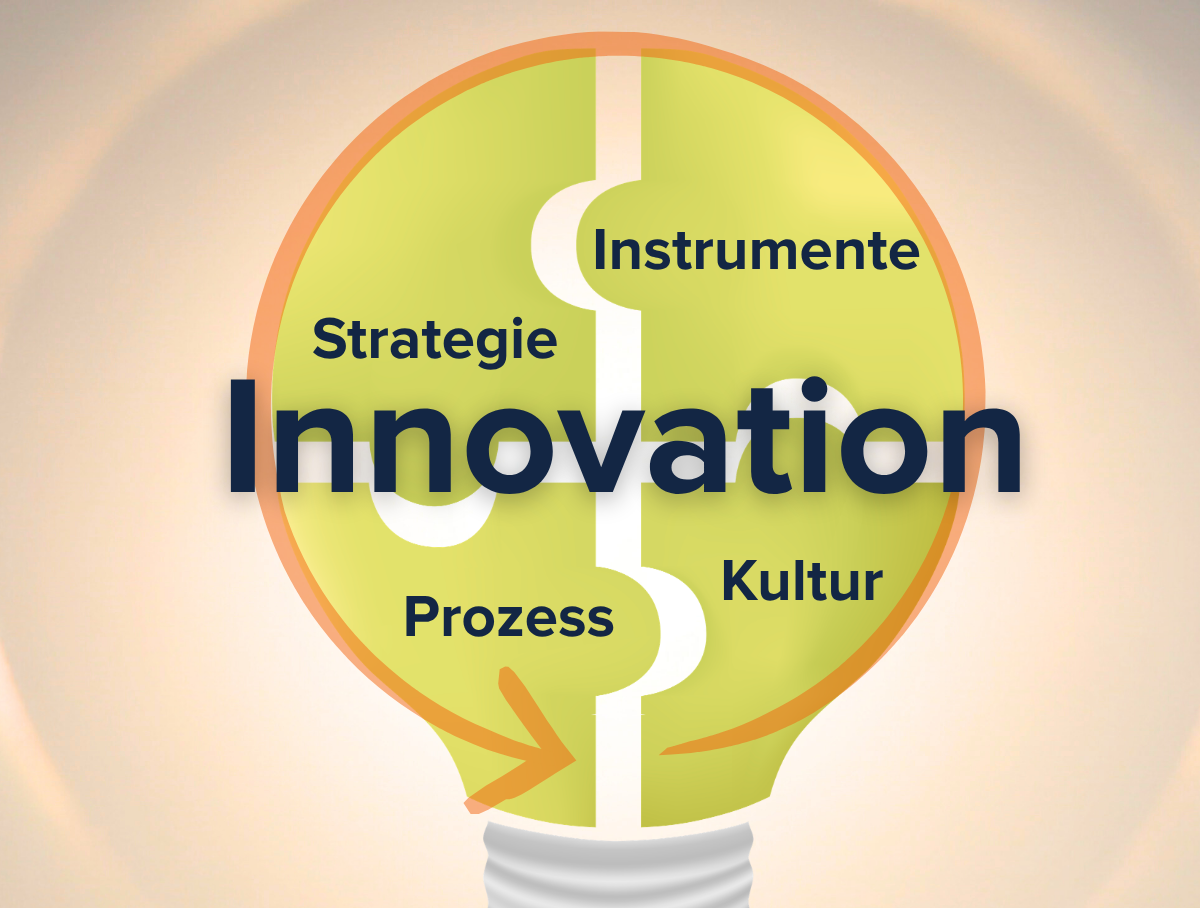
By looking at the four dimensions - innovation culture, strategy, processes and instruments - a differentiated innovation balance sheet is created as part of the innovation rally.
It shows that the banks surveyed already have a solid innovation base that is established in many areas. The banks are in a consolidated development phase and innovation is not only fundamentally recognized in the companies, but is actively shaped and lived in various forms.
The next stage of development in the supported banks is therefore not so much the expansion of additional activities, but above all greater clarity and commitment: strategies, processes and instruments can be interlinked even more consistently in order to systematically exploit the existing innovation potential and more effective.
Overall, a look at the innovation rally illustrates the added value offered by a structured examination of one's own innovative ability. The combination of qualitative insights and quantitative classification makes it clear how innovation works in everyday life and where further development can and should be specifically promoted.
The decisive factor here is not so much the sheer number of innovation initiatives, but their interplay: only when strategy, processes and instruments are clearly coordinated and become culturally tangible in everyday working life do innovation efforts develop their full effect.
The innovation rally offers a structured framework for making precisely these connections visible and deriving concrete next development steps from them.
Interested? Then get in touch with us. We will design your individual innovation rally together with you.
Where does your organization stand when it comes to innovation and what specific steps are you taking to take it to the next level?