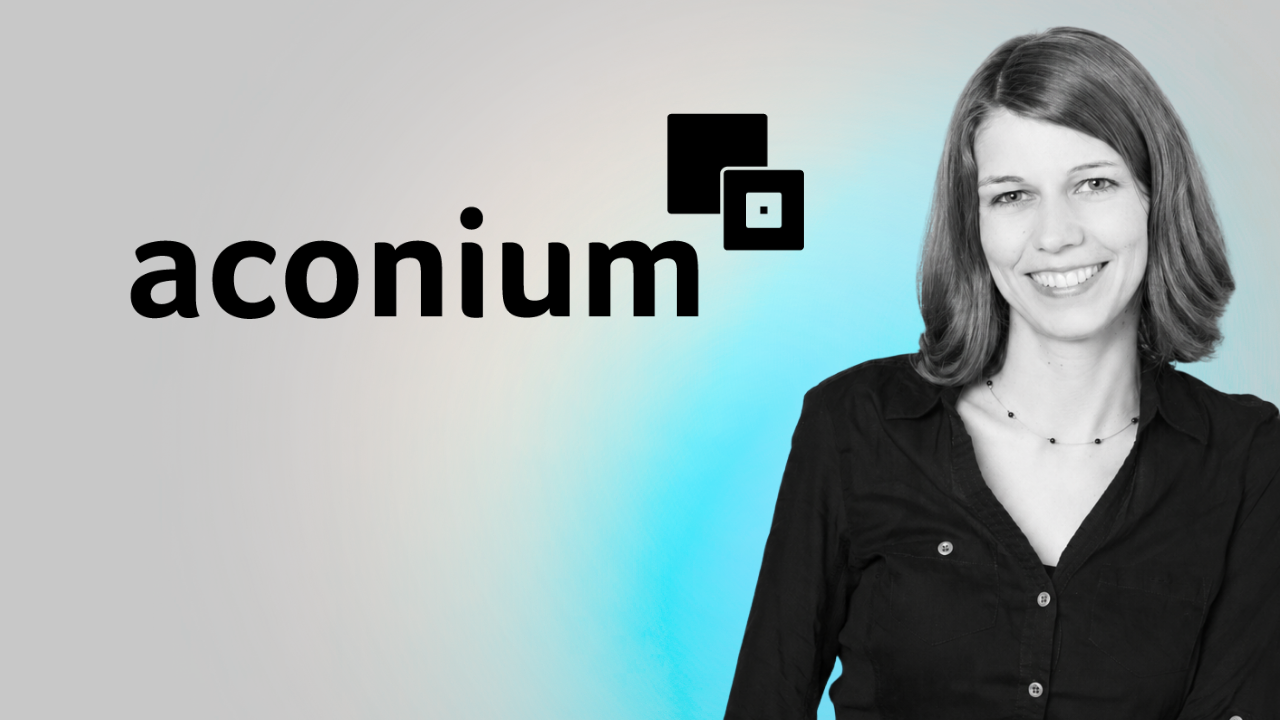
When people talk about the future of regions, the discussion often centers on broadband, mobile communications, or digital applications. It’s easy to overlook the fact that all these measures are only effective if they Part of a broader trend are. This is precisely the shift in perspective that Julia Haselberger, Team Leader for Regional Development at aconium GmbH, is pursuing. For her, successful regional development does not begin with the question of the next technology, but with a fundamental consideration: Where does a region stand today, and in what direction does it want to move?
Only once this question has been answered will infrastructure and digitalization become true enablers.
Each region has its own unique set of conditions. Economic structures, geographic location, demographic trends, and existing expertise vary considerably. That is why, in aconium’s view, there is no blueprint for a successful region of the future.
Instead of simply copying best-practice solutions, the company takes a systematic analytical approach. It all starts with the one's own strengths and weaknesses, existing Potential and specific development goals. This gives rise to a vision, which is then translated into measurable goals and ultimately into concrete projects.
Once the goal is clearly defined, the focus shifts to the infrastructure. However, it is not an end in itself, but rather a tool to make the desired development possible in the first place.
This approach is particularly evident at aconium. Infrastructure is always designed with the desired impact in mind. The key question is not: What kind of infrastructure can we build? Rather: What infrastructure do we need to make our development goals achievable?
This difference transforms the entire planning process. After all, infrastructure that no one uses or that fails to meet actual needs ties up resources without creating sustainable value. Infrastructure should therefore always be developed based on a clear strategy and never for its own sake.
This idea applies particularly to digital infrastructure. For Julia Haselberger, this encompasses far more than just fiber-optic cables or cellular networks. Only the Interaction of Various Components lays the foundation for a sustainable region: high-performance networks, digital applications, data platforms, cybersecurity, and, above all, the skills people need to make effective use of these opportunities.
Digital infrastructure thus becomes a region’s operating system. It connects government, businesses, and citizens, and lays the groundwork for new services, more efficient processes, and innovative business models.
This “operating system” alone does not yet provide any benefit. What matters is what applications are developed for it and what specific The value they bring to people create.
Another guiding principle shapes aconium's work: Regional development doesn't happen at a desk.
Local people are not only the future users of new solutions, but also important A key contributor to the entire development process. That is why the company recommends involving citizens early on, even during the analysis phase. Citizens supplement data with their experiences, draw attention to challenges that have been overlooked, and help develop solutions that are precisely tailored to needs. At the same time, acceptance of future projects increases significantly because development does not take place without their input.
This insight is universal. Whether it’s a region, a company, or an organization: transformation is successful when Turning Those Affected into Active Participants Early On.
Regional development is much more than just implementing individual projects or expanding new infrastructure. It begins with an honest analysis of one’s own starting point, uses that to develop a shared vision, and translates that vision step by step into concrete actions. This is precisely the approach aconium takes in practice. The company’s experience shows: Infrastructure Unlocks Its Value only when they are on contributes to a clear goal and offers real added value to the local community. This ensures that we are not creating a “digital region” just for the sake of digitalization, but rather a region that remains capable of taking action, livable, and sustainable in the long term.
As part of our podcast "MutOffensive," we're talking with various partners in our ecosystem in the current season about how collaboration, innovation, and transformation work in practice. A new episode is released every week.
You can listen to the full episode of the podcast on this topic for free right here!