Anyone looking to develop new products, improve services, or change internal processes often faces a similar challenge: There are already ideas and proposed solutions, but is it even clear what problem they’re supposed to solve? And do these approaches actually meet the needs of the people they’re intended for?
Design thinking helps answer these questions systematically. The method combines a user-centered approach, creative ideation, and rapid experimentation into a structured innovation process. The goal is to develop solutions that are not only compelling on paper but also prove effective in practice.
In day-to-day work, teams often fall back on familiar solutions. This is understandable, but it can prevent new approaches from even emerging. Those who commit to an idea too early may overlook alternative perspectives or fail to recognize why a solution actually fails.
Design thinking, therefore, begins one step earlier: with understanding the problem.
What are customers’ needs? What challenges do they face in their daily lives? What expectations and experiences influence their behavior? Rather than jumping to conclusions, we first ask questions, gather observations, and challenge assumptions.
This shift in perspective is crucial. After all, not every challenge can be solved with a new technology or an additional offering. Sometimes, the greatest potential lies in simplifying an existing process, rethinking a service, or looking at a problem from a completely new perspective.
Design thinking is not a rigid framework, but rather an iterative process. The individual steps can be repeated and adapted to the specific challenge at hand.
1. Empathy & User-Centric Design
It all starts with the user's perspective. Teams engage with the people for whom they want to develop a solution. Interviews, observations, and targeted questions help them identify actual needs and test their own assumptions.
2. Creative Brainstorming
Based on the insights gained, various approaches to solutions emerge. It is crucial to first consider as many perspectives as possible, rather than pursuing the first idea that comes to mind. Even unusual suggestions deserve attention, as they can open up new ways of thinking.
3. Rapid Prototyping
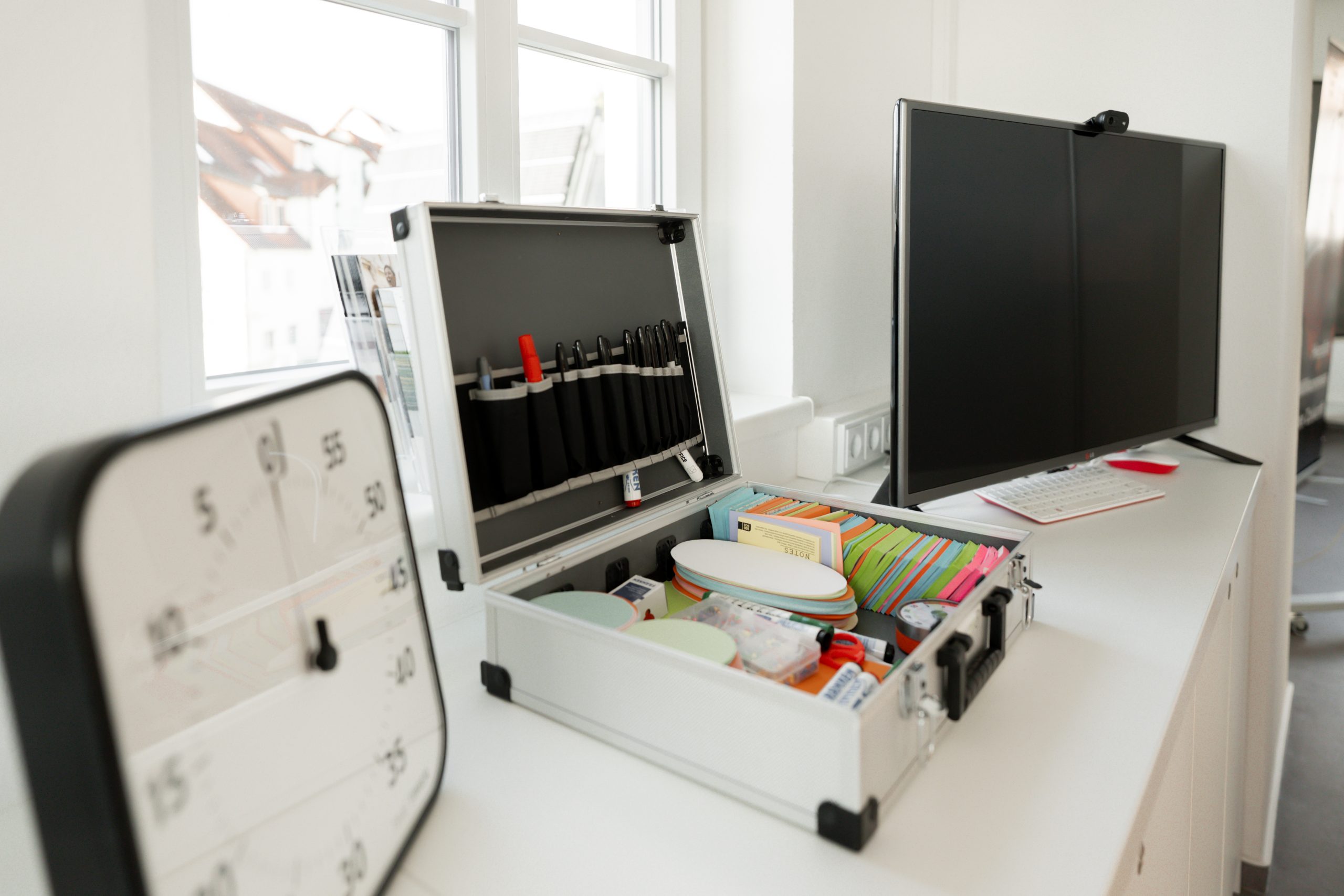
Ideas become tangible. A prototype doesn't have to be technically sophisticated or visually perfect. A sketch, a simple sequence of steps, or a role-playing exercise can be enough to make an idea understandable and tangible.
4. Iterative Testing
The approaches developed are being tested with potential users. The feedback reveals what works, where difficulties lie, and which aspects need to be reconsidered. The findings are incorporated directly into the next round of development.
What makes this approach unique is that the process does not necessarily end after the first test. New insights may lead teams to modify their ideas or even return to their original understanding of the problem. This is precisely where the strength of the iterative approach lies.
Anyone who waits until an idea has been fully implemented to evaluate it has already invested a great deal of time and resources. Design Thinking brings the learning process forward.
A simple prototype can reveal early on whether an approach is even understood, offers real added value, or misses the mark when it comes to the target audience’s needs. This does not automatically eliminate every project risk. However, it provides a better foundation for decision-making before larger investments are made.
At the same time, this method brings together different perspectives. When people from different disciplines work together on a challenge, their diverse experiences and ways of thinking come together. This exchange can lead to solutions that might not have been developed within individual departments.
Design thinking is therefore particularly well-suited for open-ended and complex problems where the right solution has not yet been determined. This can involve the further development of a service, the improvement of a customer experience, or the redesign of an internal process.
For Design Thinking to work, it takes more than just individual creative methods. What’s crucial is a way of working that encourages questions, incorporates different opinions, and allows for experimentation. Ideas don’t have to be perfect right away. Rather, the goal is to learn together and translate insights into concrete next steps.
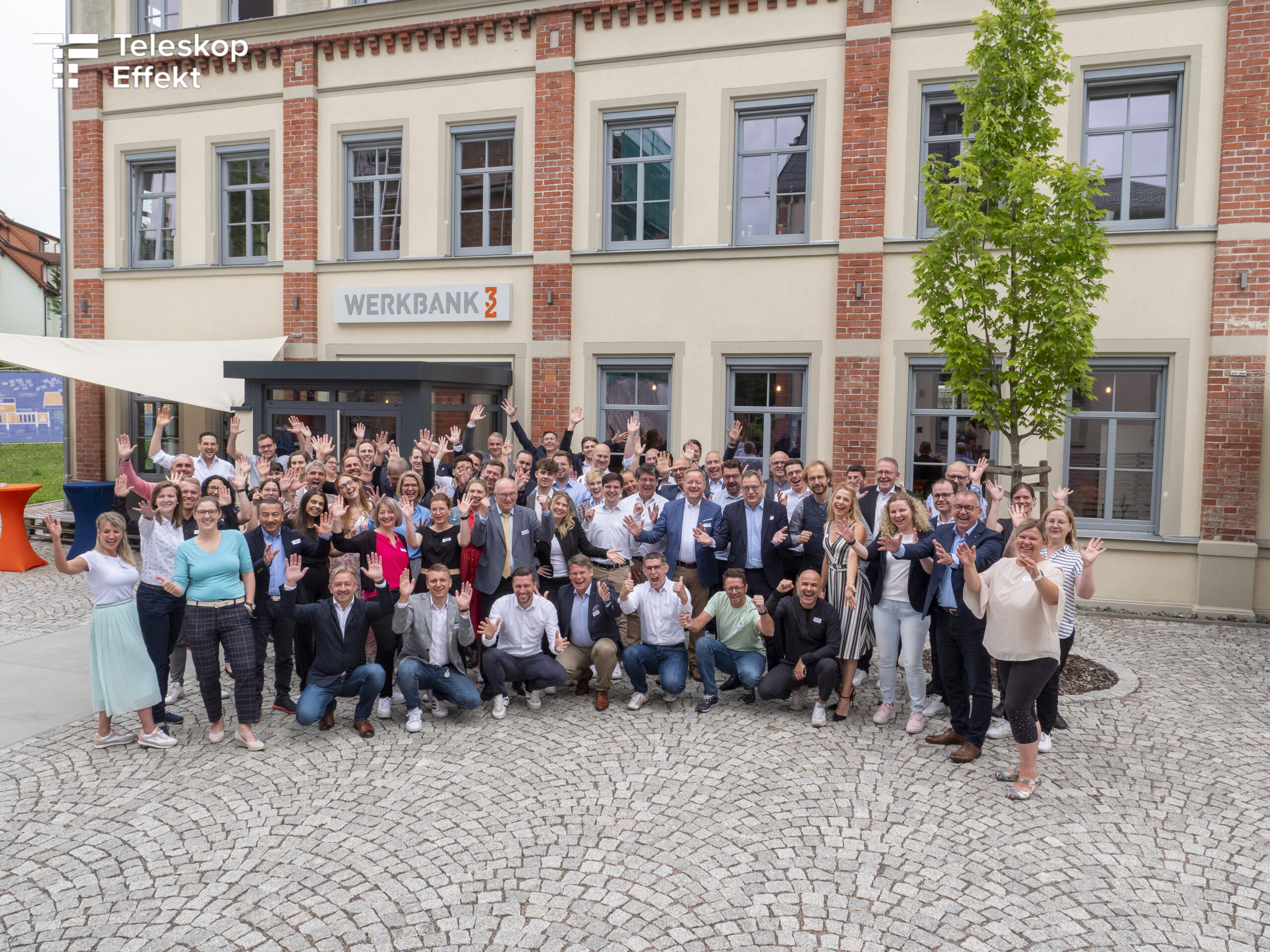
The environment can also make a difference. Flexible workspaces, ample room for discussion, and opportunities to visualize ideas all foster collaboration. Werkbank32 in Mittweida provides the ideal setting for this: Teams can step back from their usual daily routines, gain new perspectives, and work together on specific challenges.
In a design thinking workshop, therefore, the focus is not on the method for its own sake, but on the team’s problem statement. Depending on the needs, individual steps can be used in a condensed form or integrated into a more comprehensive innovation process.
Design thinking does not promise any magic formulas. The method does not replace technical expertise or strategic decisions. However, it helps to better understand complex challenges, develop targeted solutions, and learn from real-world experience early on.
Those who are willing to question assumptions and test ideas lay an important foundation for innovation. After all, good solutions don’t come about simply because we find answers faster. They emerge when we ask the right questions first.
Would you like to tackle a specific challenge from your day-to-day work using Design Thinking? At Werkbank32, we’ll work with your team to develop new perspectives and test suitable solutions.
Are you interested in design thinking? Werkbank32 is here to help.